
Bernarda and María Josefa
The House of Bernarda AlbaBernarda’s control of her mother contrasts with María Josefa’s unruly longing for marriage, children, and a life beyond the house.
increasing Bearing strength in each event
 decreasing
Bearing strength in each eventdecreasingThe Old Woman Hidden
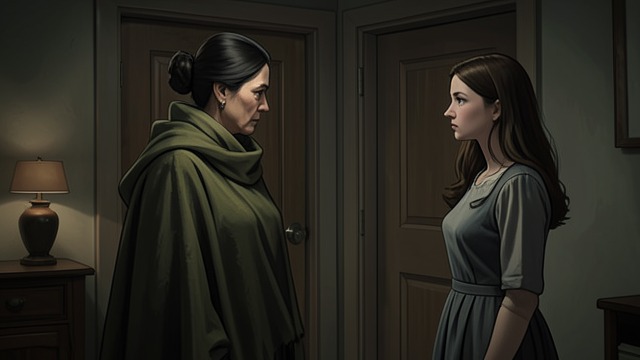
The Old Woman Hidden
A Family Secret
María Josefa calls from inside a locked room while the mourners gather. Bernarda’s mother is absent from public ceremony but present as a concealed household problem.
Authority Across Generations
Bernarda controls the older woman as she controls her daughters. The family’s hierarchy moves downward through generations rather than softening with age.
The First Demand for Marriage

The First Demand for Marriage
A Desire Declared
María Josefa escapes and asks for her jewelry, insisting that she wants to marry a handsome man at the shore. Her speech is extravagant but emotionally direct.
Bernarda’s Refusal
Bernarda orders her locked up again. The mother’s wish for companionship meets the daughter’s need to maintain control and public order.
A Song of Motherhood

A Song of Motherhood
The Lamb as Child
María Josefa carries a lamb and sings to it as her baby. Her imagined care contrasts with the fear and bitterness shaping the household.
A Different Family Dream
She imagines children, neighbors, and an open shore. Her vision directly opposes Bernarda’s tightly controlled home.
A Clear Warning
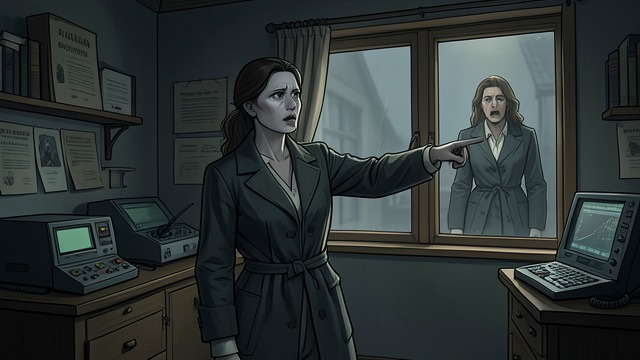
A Clear Warning
Perception Beneath Confusion
María Josefa names the sisters’ longing for Pepe and warns that he will devour them. Her speech moves between fantasy and an accurate reading of family danger.
The Mother’s Absence
Bernarda is not present to hear the warning. María Josefa’s truth remains powerless because the household treats her as mad and confines her.
The Escape Unfinished
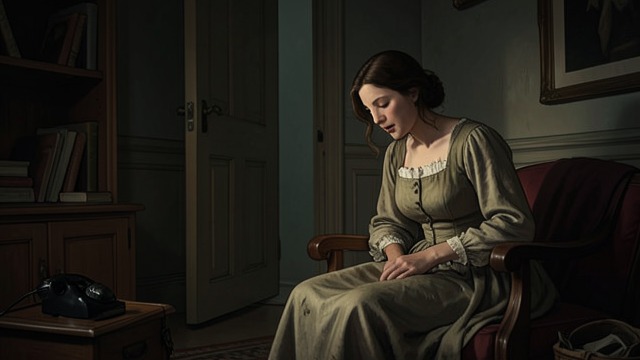
The Escape Unfinished
Return to the Room
Martirio persuades María Josefa to go back to bed, promising later to open the door. The old woman accepts the reassurance and leaves singing.
Desire Still Contained
Her imagined departure never becomes a real escape. Bernarda’s authority remains intact even as the play’s central conflict moves toward its ending.
Act One, during the funeral service
Act One, near the end
Act Three, in the nearly dark courtyard
Act Three, during her exchange with Martirio
Act Three, after Martirio leads her away
